Labor shortages, tight delivery windows and demanding warehouse environments are putting unprecedented pressure on food logistics operations. For forklift operators, these challenges often translate into long shifts, physical strain and mental fatigue — factors that can lead to injuries, lost productivity and high turnover.
Overexertion and bodily reaction are the leading causes of injury among warehousing and last-mile delivery workers, which can lead to back pain and other musculoskeletal disorders, according to a 2024 Government Accountability Office report. Ergonomic improvements — such as lift truck adjustability, cushioning and better visibility — can help reduce these risks.
Challenges affecting food logistics operators
Food logistics warehouses are fast-paced, high-traffic environments dominated by narrow-aisle designs. Workers must stand for hours operating everything from rider jacks to three-wheel standup and reach trucks with minimal relief. And in cold storage, workers wear bulky insulated suits that exacerbate usability and comfort challenges. Visibility is another issue: towering stacks of product and constant movement force operators to twist and crane their necks to avoid collisions with other lift trucks or pedestrians.
Order picking is a mission-critical task in food warehouses that also pushes operators to their limits, with workers walking, bending and twisting to lift heavy product during long shifts. Movement is near-constant: Some estimates suggest operators climb the equivalent of the Empire State Building more than 15 times and walk two marathons each week. With high productivity requirements and work that demands precision and accuracy, turnover rates in these environments are notoriously high.
The overall operational pressures that drive food supply chains also contribute to operator fatigue. Tight delivery windows, SKU proliferation and high throughput expectations mean operators are squeezed to work faster and minimize mistakes. For example, as consumer demand rises, supply chain operations must push significantly more product through warehouses. Mistakes like damaged goods or mispicks lead to food waste and lost revenue, adding mental stress to an already demanding job.
The voice of the operator: Watch what they do and listen to what they say
An example of how overall operational pressures directly affect warehouse workers is incentive pay: the more product operators move, the more they earn. Many operators improvise solutions to maximize productivity and ward off fatigue, and visiting any food distribution facility reveals operators taking the initiative.
Operators do not want to keep climbing on and off trucks to throw away paperwork or grab their radio or water bottle when pay depends on moving product. For example, they might strap a cardboard box to the truck as a bin, so they can continue applying barcodes to products without stopping to dispose of sticker backing.
Or they may add padding to the compartment to quell strain on their knees and back in search of relief that many trucks do not address from the factory. But jerry-rigged floor padding can interfere with essential truck systems that detect operator presence, and run counter to the B56.1 safety standard, which states that “no modifications or alterations to a powered industrial truck that may affect the capacity, stability or safe operation of the truck shall be made without the prior written approval of the original truck manufacturer.”
Direct feedback from operators can make the value they place on certain features crystal clear. When trialing a new standup lift truck model, universal, vehement praise went to the factory-installed floor cushioning, which offered relief from the aches that can come from traveling over thresholds and other bumps in the facility.
Ergonomic forklift features that make a difference
Whether operators verbalize feedback or show it through DIY “enhancements,” logistics operations can respond with equipment that incorporates key features to help operators stay fresh and focused and perform at their best.
The compartment serves as the forklift operator’s office and is the focal point for ergonomic fundamentals, technology and productivity-enhancing touches. A generously sized compartment with a wide opening can provide a basic level of mobility and comfort, and include built-in compartments to reduce clutter and set operators up for efficiency. Beyond that, operators seek features — such as adjustable armrests and generous padding — that allow them to assume a range of operating positions and tailor the truck to provide the best fit.
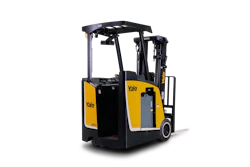
Finding a comfortable position in standup lift trucks, such as reach trucks and three-wheel models, can be especially challenging. A common approach to detecting operator presence is to have pedals that operators stand on, which can require operators to stay in the same position for an entire shift, leading to excessive fatigue. But newer pedal-free systems are available that avoid these constraints. One option uses a series of strategically placed sensors around the compartment base to detect operator presence. These systems allow operators freedom to reposition their feet and to even use an elevated footrest (if equipped) during operation.
Given the time these operators spend on their feet, the comfort of the truck floor itself is also critical. For example, a fixed rubber-mat floor is adequate for some operations, and other options, like cushioned or fully suspended floor systems, absorb more vibration when riding over dock plates and other bumps. Some bare minimum offerings provide little more than a steel plate to stand on, and manually adjustable options are often prone to wear and so difficult to adjust that they’re often left static.
Visibility Improvements
Visibility is crucial for preventing safety incidents and product damage, and for improving performance when picking and placing loads at height. On standup models, visibility up through the overhead guard is crucial for retrieving and storing loads at elevated rack locations. Compared to an exclusively flat-plate design, lift trucks that use sturdy, lower-profile bars angled appropriately within the overhead guard can offer superior visibility. The mast is another important component of upward visibility. Routing cabling, chains and lift cylinders closer to the mast creates a larger viewing window and helps avoid operators straining their necks to see.
Technology Integration
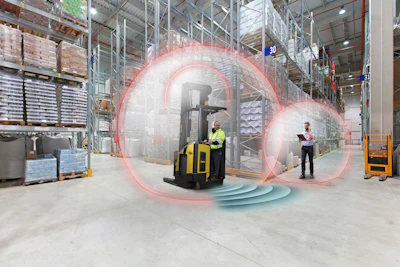
Modern lift truck technology plays a critical role within food storage environments, where staffing is a challenge and operators face constant pressure and have varying levels of experience. Even skilled, properly trained operators have off days, and the National Safety Council reports that 97% of workers have at least one risk factor that increases the risk of workplace injuries. Operator assist solutions (OAS) can reinforce proper operating practices by limiting equipment performance in challenging situations, while keeping the operator in control of the lift truck.
In practice, these solutions can help address situations such as:
- A pedestrian unexpectedly walks in front of a lift truck
- A forklift operator travels too quickly through crowded areas or around turns
- A load slides off the forks and damages product
- A lift truck hits racking or other equipment
Looking ahead
A shortage of experienced lift truck operators remains a challenge for warehouses, with competition for a limited labor pool driving an annual turnover rate often over 40%. The cost of bringing in new staff can be high, with some studies estimating onboarding costs at between 50-90% of an employee’s annual pay.
While turnover is an industry-wide challenge, warehouses are not powerless in attracting and retaining talent. Ergonomic equipment can signal to employees that they are valued and serve as a critical tool that aligns their capabilities with the high productivity targets expected of them. But beyond performance metrics, ergonomics can address one of the most powerful elements of warehouse operators — alleviating some of the physical strain and aches that can accompany the satisfaction of a long day’s work.