Europe’s container market is entering a phase where traditional supply-demand signals no longer tell the full story. In fact, the region is not experiencing a true oversupply of containers, but rather a reduction in effective capacity driven by slower equipment circulation across disrupted trade corridors, according to the Sogese Container Market Update (April 2026).
“Containers are out there, but they are not where or when the market needs them. The market today is defined by how efficiently equipment can move, not how much of it exists,” says Andrea Monti, CEO and managing director of Sogese. “This is not a supply problem, it’s a circulation problem.”
Key takeaways:
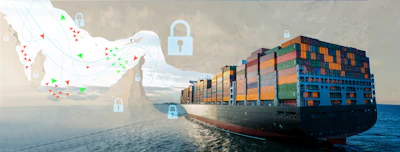
· Ongoing instability linked to the Middle East tensions continue to stress the container circulation as far as Europe. Longer routings are extending Asia–Europe transit times by 10–20 days, directly reducing equipment availability and slowing network circulation.
· As mainline services are restructured, more cargo is being routed through western Mediterranean transshipment hubs such as Algeciras and Tanger Med. This is increasing reliance on feeder networks for distribution into Southern Europe, turning the final leg of the journey into a key point of volatility.
- As a result, feeder networks are handling greater volumes, connection windows are tightening and costs are rising in specific corridors.
- Despite a relatively large global fleet and soft headline demand, the report highlights a critical shift, as equipment is spending more time in transit; containers are increasingly positioned in the wrong locations; inland congestion and depot pressure are delaying release and reuse; and blank sailings and network adjustments are further tightening availability.
- Cost pressures are no longer episodic but embedded, with bunker surcharges and war-risk premiums now part of the baseline; EU ETS exposure influencing pricing structures; and longer transit cycles increasing storage and buffer costs.
- The growing pressure on feeder networks and overall circulation inefficiency is not affecting all cargo segments equally. As constraints increase across the system, a clear divergence is emerging:
Resilient segments: pharmaceuticals, reefer logistics, and time-sensitive cargo, where reliability and service continuity justify higher costs
Under pressure: standard dry cargo and low-margin intermediary flows, which remain highly price-sensitive and more exposed to disruption