For years, shippers would ask the same question to a cold storage provider: can you hold my products at temperature? It was a simple yes or no question. But today, that question has evolved and been replaced by one that is harder to answer and harder to fake: how do you hold it, and can you prove it?
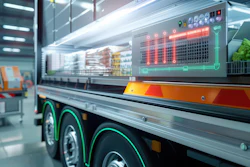
That shift shows up first in how temperature gets tracked. The old standard was checking temperature in and temperature out, two data points bookending the stay. That's no longer enough. What matters now is what happened in between. Was the product held at the required temperature continuously, or did it drift for an hour during a shift change? That level of detail is becoming increasingly important as regulations and consumer expectations grow, and cold storage operators and 3PLs are feeling the pressure to answer with data, not assurances.
The providers who can show a continuous temperature record, not just two snapshots, are the ones building trust with increasingly sophisticated customers.
And that's just the first thing that's changed.
Compliance is coming, and completing a recall won’t be enough
FSMA 204, the FDA's food traceability rule, has been delayed more than once. The compliance date now sits at July 20, 2028, extended from the original January 2026 target. It's easy to read that extension as breathing room. However, it's the opposite. The companies that treat 2028 as a distant deadline are going to find out how much work is actually involved and how little time is left once they start.
Here's the distinction that matters: most organizations can already complete a recall. Throw enough people at it, pull in whatever tools you have, and you can act. What a lot of companies can't do is produce the documentation a recall requires, on demand, in the format regulators expect. Acting on a problem and proving what you did about it are two different capabilities. FSMA 204 is going to require exactly that kind of proof: where a product came from, everywhere it went, and the ability to hand that record over fast. Systems that were built to move inventory, not document its history, are going to need real upgrades to meet that bar.
Consumers aren't just asking if it's safe anymore
Safety used to be the whole conversation. It isn't now. Buyers want to know where a product was sourced, whether it's organic, whether pesticides were used, whether it came from the region it claims to. That shift in consumer expectation has already changed operational decisions. Some providers now carry higher safety stock specifically because the same product gets sourced from multiple regions, and inventory has to be kept separate and identifiable by origin to satisfy that demand. That's not a marketing decision. That's a warehouse and inventory management decision, driven entirely by what the consumer at the end of the chain now expects to know.
A recall is invisible until it isn't
Food recalls happen constantly, far more often than most people realize, because most of them never make the news. They get handled quietly, product gets pulled, and the public never hears about it. That changes the moment a recall becomes visible: when it's slow and when more people are affected than should have been. At that point, a company's traceability gaps stop being an internal operational issue and become a public trust issue. In a market where consumers already have more information and more skepticism about their food than they did even ten years ago, a visible traceability failure does lasting damage to a brand's reputation, not just its bottom line for that quarter.
The real differentiator isn't the warehouse anymore
For the most part, people misjudge the traceability challenge. They treat it as a WMS issue, full stop. The core functions a food logistics operation needs from a WMS, lot tracking, rotation, product segregation, are mature. There's not much room left to improve there.
The gap is what sits around the WMS: is it capturing accurate temperature data automatically, or relying on manual checks? Is it connected to the systems that hold compliance and import-export documentation, so that information is accessible when someone needs it fast? Can it flex for specialized processes like blending or commingled inventory, where the margin for error is smaller and the operational detail required is much higher?
Increasingly, the answer comes down to integration. A WMS that can connect cleanly with ERP, TMS, and the emerging technologies built specifically to solve food logistics problems is going to outperform one that operates as a closed system.
Why traceability is about more than ROI
So, what’s the return on investment for better traceability? It's not really an ROI question. It's regulatory: this is coming whether a company is ready or not. It's about liability: providers with the right systems in place lower their own exposure when something goes wrong. And increasingly, it's about competitive advantage: the companies that build this capability now, ahead of enforcement, are going to be the ones customers trust when a competitor gets caught unprepared. That's not a cost of doing business you can avoid. It's the cost of staying in it.