*Sponsored by Ehrhardt Partner Group (EPG).
For food and beverage companies, visibility carries higher stakes. Traceability helps protect product quality, maintain food safety, meet customer requirements, and respond quickly when something goes wrong. Knowing where inventory is matters, but so does understanding what is happening around that inventory as it moves through the warehouse.
That becomes difficult in increasingly complex operations. Products move through storage, replenishment, picking, automation, staging, and shipping, often under strict temperature requirements and tight delivery windows. At the same time, warehouse teams are managing high volumes, labor constraints, and a growing mix of technology.
Most operations are not short on data. The harder challenge is connecting that information, putting it into context, and using it to make better decisions. For food and beverage warehouses looking to build smarter, more responsive operations, five steps can help turn visibility into action.
1. Connect the Systems You Already Have
A modern warehouse rarely runs on one technology.
The WMS manages inventory and orders. The WCS coordinates automation. Voice technology supports workers. Other systems manage transportation, labor, and supporting processes. Robotics and other automation technologies continue to be added to the mix.
Adding technology is one thing. Making it work effectively with the existing operation is another.
A warehouse platform designed to integrate with different technologies can create a more connected operational environment while preserving flexibility as requirements change. Vendor-agnostic integration can also simplify the introduction of new automation by reducing the need for additional middleware between systems.
For cold-chain operations, that flexibility matters. Facilities may need to introduce new automation, replace equipment, expand capacity, or adapt processes without rebuilding the technology foundation around every change.
Start by mapping how data moves through your current systems. Identify where information is duplicated, delayed, or isolated, and make sure new technologies can connect to the same operational ecosystem.
2. Assess What is Actually Happening on the Floor
System data doesn't tell you everything. It often shows the outcome of a process without explaining what caused it.
A WMS might show that an order took longer than expected, for example, but not reveal that a congested aisle, blocked staging area, repeated equipment interaction, or process deviation contributed to the delay. Transactional data tells an important part of the story. Physical operations provide the rest.
Intelligent Video Analytics can help bridge that gap by analyzing activity within the physical warehouse and identifying events and patterns that may not appear in transactional data alone. When those interpreted events are combined with WMS and WCS information, operators gain additional context around how warehouse processes are actually being executed.
Think of it as moving beyond a record of what happened to better understand how and why it happened.
For food and beverage warehouses, that broader perspective can help uncover bottlenecks, process deviations, congestion, and other opportunities to improve execution as operations are taking place. Don't limit visibility to the data your core systems already capture. Look for the gaps between what systems report and what is physically happening on the warehouse floor.
3. Make the Data Useful
More data does not automatically create better visibility. In fact, it can make decision-making harder if operators have to move between multiple systems and dashboards to determine what deserves attention.
Rather than replacing the systems that already run the operation, an AI environment can sit across existing technologies and use the information they generate to identify patterns, surface anomalies, and recommend potential actions. This creates an intelligence layer across the operation without requiring a rip-and-replace strategy.
The distinction is important. The goal isn't simply to collect more information. It's to help warehouse teams recognize what matters and determine what to do next.
That could mean identifying a recurring bottleneck, recognizing an inefficient process, or drawing attention to a developing operational issue before it becomes a larger disruption.
AI also does not need to make every decision autonomously. The appropriate level of automation depends on the decision, its potential consequences, and the operational context required. In many cases, the immediate value comes from giving warehouse teams better information and decision support so they can act faster.
Before adding another dashboard, consider how the data you already have could be connected and contextualized to support better decisions.
4. Design Technology Around the People Using it
People are an important part of warehouse visibility and execution, yet the user experience can be overlooked when new technology is introduced.
Food and beverage warehouses depend on workers to maintain throughput and accuracy, and temperature-controlled environments can make that work particularly demanding. Repetitive tasks, protective clothing, freezer temperatures, and long shifts all influence how practical a technology is on the warehouse floor.
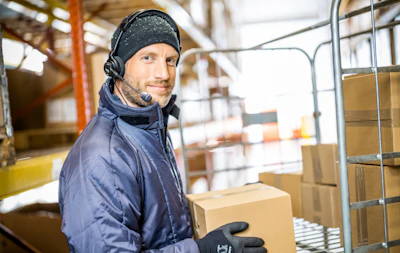
Voice-directed picking can help by allowing workers to keep their hands and eyes focused on the task instead of repeatedly interacting with a screen or handheld device. That hands-free approach can reduce unnecessary movements while supporting consistent execution throughout a shift.
When technology fits naturally into the workflow, workers can spend less time interacting with the technology itself and more time completing the task.
Engagement matters as well. Gamification can introduce performance goals and challenges into repetitive picking workflows, giving employees greater visibility into their own progress while helping operations reinforce productivity and accuracy objectives.
In temperature-controlled environments, efficiency has an additional dimension: time. Avoidable steps and delays don't just affect throughput. They can also increase the amount of time employees spend working in demanding conditions. Streamlining execution can therefore improve both operational performance and the worker experience.
Evaluate warehouse technology from the perspective of the person who will use it every day. The best technology should make the work easier to execute, not add another layer of complexity.
5. Turn Visibility into Continuous Improvement
The real value of visibility comes from what happens next.
A connected warehouse environment can bring together information from WMS and WCS systems, automation, voice technology, and other operational data sources. AI and analytics can then help identify patterns across that information and highlight opportunities to improve execution.
When these technologies work together, visibility becomes part of an ongoing feedback loop rather than a collection of disconnected data points.
Warehouse teams can identify where processes are slowing down, investigate the underlying causes, make an informed change, and then use operational data to determine whether that change produced the intended result. Over time, that cycle turns visibility from a monitoring capability into a tool for continuous improvement.
For cold-chain and food and beverage operations, this approach can support improvements in productivity, accuracy, labor utilization, and overall operational efficiency while giving teams the flexibility to adapt as technology, customer expectations, and business requirements evolve.
Cold-chain visibility should not stop at knowing where a product is. The greater opportunity is understanding what is happening around that product, why it is happening, and what action should come next.
When systems, operational data, and people are connected in that way, visibility becomes more than something to monitor. It becomes a way to continuously improve how the warehouse operates.