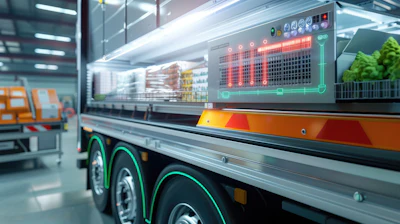
Food manufacturers, distributors, and retailers have made tremendous progress in improving cold chain visibility:
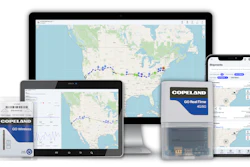
● Sensors monitor temperatures in real-time
● Barcode and RFID technologies provide detailed product histories
● Warehouse management systems (WMS) record every movement
● Digital platforms can trace products from production to store shelves within minutes
Yet despite these new technological advances, food recalls continue to expose the common weakness of companies discovering that while they have access to enormous amounts of data, they lack the operational processes needed to ensure that data is accurate, complete, and actionable. Yes, traceability is a technology challenge, but is also a process challenge.
As regulatory requirements change and consumers demand greater transparency into food origins, organizations are realizing that successful traceability depends on every step of the cold chain working together. Digital records are only as reliable as the warehouse operations, inventory practices, and material handling processes that generate them.
Visibility alone doesn't guarantee traceability
Many organizations have invested heavily in tracking technologies over the past decade. Temperature monitoring devices, IoT sensors, cloud-based software, and automated reporting have dramatically increased visibility across refrigerated supply chains.
However, visibility and traceability are not synonymous. Visibility answers questions like where a shipment is located and what temperature it is experiencing. Traceability answers much more complex questions:
● Which production lot was used in this shipment?
● Which customers received products from a specific batch?
● Were FIFO or FEFO rules consistently followed?
● Was product exposure outside acceptable temperature limits?
● Can this information be verified during an audit?
These answers depend on standardized operational processes that capture accurate information every time a product moves through the warehouse. If receiving procedures are inconsistent, inventory is manually relocated without updating the system, or pallets are staged incorrectly, even the most advanced software cannot reconstruct an accurate chain of custody.
The warehouse plays a bigger role than many realize
When people think about cold chain integrity, they often focus on transportation. Refrigerated trucks, insulated packaging, and last-mile delivery certainly matter, but warehouses represent one of the most critical control points in the entire cold chain.
Products may enter and exit refrigerated storage multiple times before reaching consumers. Every transfer introduces opportunities for human error. Common operational issues include:
● Incorrect lot assignments
● Manual inventory adjustments
● Misplaced pallets
● Inconsistent expiration date tracking
● Delays during receiving or shipping
● Products stored outside designated temperature zones
Each seemingly minor mistake weakens traceability and increases recall complexity.
During a food safety investigation, organizations need confidence that every product movement was accurately documented. Missing or inconsistent records can force companies to expand recalls far beyond the affected inventory because they cannot definitively identify impacted products.
Automation creates process consistency
Automation is often discussed in terms of labor savings or productivity improvements. While those benefits are important, automation also delivers consistency, something equally valuable for food safety. Automated storage, retrieval, and material handling systems execute processes the same way every time. Inventory movements are automatically recorded, product locations remain accurate, and warehouse transactions are synchronized with warehouse management systems without requiring manual data entry. This consistency strengthens traceability because every movement generates reliable digital records.
Automated systems also reduce unnecessary product handling, minimizing opportunities for damage, contamination, or temperature excursions. For refrigerated and frozen facilities where products have limited shelf lives, reducing handling steps helps preserve both product quality and inventory accuracy. As order volumes continue shifting toward smaller, more frequent shipments, maintaining consistent execution becomes more difficult through manual operations alone.
Expiration management depends on reliable data
For fresh and frozen products, shelf-life management is inseparable from traceability. Knowing where inventory is located is important, but knowing which inventory should ship first is essential. Many organizations implemented first in, first out (FIFO) or first expired, first out (FEFO) strategies, yet these approaches only work when inventory records accurately reflect product locations, lot numbers, and expiration dates.
Automated warehouse systems can continuously monitor inventory age, direct operators to the correct inventory, and ensure replenishment decisions support optimal product rotation. When expiration management becomes embedded within daily warehouse processes rather than relying on manual oversight, organizations reduce waste while strengthening compliance documentation.
Traceability requires end-to-end integration
Cold chain traceability often breaks down at the handoffs between systems. Warehouse management systems, transportation management platforms, enterprise resource planning software, production systems, and quality management applications all generate valuable information. But when these systems operate independently, data gaps emerge.
Successful traceability depends on connecting these operational systems so information flows seamlessly across receiving, storage, production, fulfillment, and shipping. This integration enables organizations to associate inventory with batch numbers, expiration dates, storage conditions, inspection records, and customer shipments within a single digital record. When regulators or customers request documentation, organizations can quickly produce a complete audit trail instead of manually assembling records from multiple systems.
Designing warehouses for traceability
Warehouse design itself has become an important contributor to traceability. Modern automated facilities incorporate dedicated temperature zones, optimized product flows, automated pallet storage, intelligent conveyor systems, and store-ready order assembly. These capabilities reduce unnecessary product movement while improving inventory accuracy.
Automated picking solutions also help ensure products remain properly sequenced according to shipping priorities while minimizing handling time inside temperature-controlled environments. Even warehouse energy management contributes indirectly to traceability. Intelligent automation can reduce refrigeration demands through optimized equipment scheduling, efficient routing, and energy recovery technologies while maintaining stable environmental conditions that protect product quality.
Preparing for the next recall before it happens
No food company wants to experience a recall, but every organization must prepare for the possibility. The companies that recover most effectively are not necessarily those with the newest technology, but are the ones with disciplined operational processes supported by integrated automation. When inventory movements are consistently recorded, expiration management is automated, warehouse operations follow standardized workflows, and information flows across connected systems, organizations can isolate affected products quickly and confidently. That reduces financial losses, protects consumers, minimizes disruption, and preserves brand reputation.
Technology supports good processes, not the other way around
The future of cold chain traceability will undoubtedly include artificial intelligence, predictive analytics, digital twins, and increasingly sophisticated IoT monitoring. These technologies will continue expanding supply chain visibility and improving operational decision making. However, none of them can compensate for inconsistent warehouse execution or incomplete operational data.
The strongest cold chains are built on repeatable, standardized processes that generate accurate information from the moment products enter a facility until they reach their final destination. Technology provides the tools, but disciplined operations provide the foundation.