
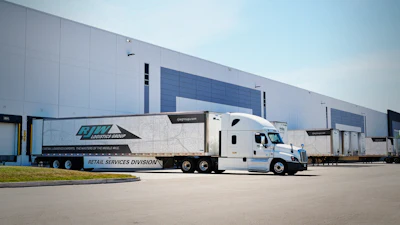
For years, transportation was measured primarily by cost and delivery performance. Today, however, fleet management has become a strategic capability that directly influences retailer compliance, product availability, inventory efficiency and revenue growth. As retailer expectations continue to evolve and supply chains become more complex, transportation’s role has expanded well beyond execution.
Fleet management plays a critical role in ensuring products are available where and when consumers expect them, meeting increasingly stringent retailer requirements and creating the supply chain agility needed to support growth. In a retail environment where on-time, in-full (OTIF) performance, inventory visibility and speed-to-shelf directly impact profitability, fleet management is no longer simply about moving freight. It’s about creating the agility and responsiveness needed to compete in today’s retail landscape.
Suppliers gaining a competitive advantage today aren't simply moving freight more efficiently – they're building supply chains that are connected, data-driven and responsive. They recognize that transportation influences inventory flow, retailer compliance, shelf availability and the ability to capitalize on growth opportunities. As a result, fleet management has evolved from a transportation function into a strategic lever for driving stronger supply chain performance.
Visibility: Turn transportation data into predictive intelligence
Effective decision-making starts with visibility. In today's retail environment, visibility isn't simply about tracking shipments, it's about understanding how products are moving through the supply chain and using that insight to make better decisions. When inventory, transportation and retailer data operate in silos, suppliers are often left reacting to disruptions rather than preventing them. As a result, delayed shipments and missed retailer commitments can quickly impact service levels, retailer relationships and profitability.
Greater visibility enables suppliers to proactively manage inventory flow and identify potential risks. With real-time insight into shipment status, organizations improve OTIF performance and better align supply chain execution with retailer expectations. Increasingly, leading organizations are using transportation and inventory data not only to identify disruptions, but also to predict them. This gives supply chain teams more time to adjust inventory positioning, transportation plans and delivery schedules before service levels are affected. As supply chains become increasingly complex, visibility has evolved from an operational advantage to a foundational requirement for consistent retail performance.
Greater control: Create predictability in an unpredictable environment
While visibility provides the insight to make better decisions, control is what enables suppliers to act on them. Maintaining consistent performance requires more than access to data. It requires the ability to influence outcomes.
From shifting demand patterns and retailer requirements to transportation disruptions and inventory fluctuations, suppliers are operating in an environment where unpredictability is the norm. The organizations that perform best are creating greater alignment across transportation, warehousing, inventory management and technology. When transportation, inventory and fulfillment strategies work together, suppliers gain more control over inventory flow and reduce the friction that often leads to delays, inefficiencies and missed retailer expectations. The result is a supply chain that is not only more efficient, but also more predictable, allowing suppliers to execute with greater confidence and maintain stronger retailer relationships.
Retail execution: Where supply chain performance drives growth
Visibility and control create the foundation, but their value is realized at retail. When suppliers can anticipate disruptions and move products through the supply chain with greater precision, they are better positioned to maintain product availability and improve OTIF performance.
Beyond reducing disruptions, this approach creates a more agile and scalable supply chain that adapts to changing market conditions. In an increasingly competitive retail environment, the suppliers that win are those that treat logistics as a business strategy rather than a cost center.








![Top Tech Logo 2026 Vertical [color]](https://img.foodlogistics.com/mindful/acbm/workspaces/default/uploads/2026/04/top-tech-logo-2026-vertical-color.mWl7RAiZmg.png?ar=16%3A9&auto=format%2Ccompress&bg=fff&dpr=2&fill-color=fff&fit=fill&h=135&q=70&w=240)
