For companies involved in the food supply chain, managing the transportation function can be fraught with complications. There are myriad factors to manage, including properly spec’ing equipment, maintaining the right number of trucks, recruiting and retaining drivers, keeping up with and maintaining DOT regulations, managing workers’ compensation, handling liability insurance, and so many more.
All of these elements are critical to success in the food supply chain, but they take time and resources away from a company’s core business. There are many reasons for a company to outsource its transportation function to a third-party logistics (3PL) provider, including the ability to focus resources on its primary operations.
Removing the people headache
Driver availability remains a concern and encompasses more than simply attracting qualified drivers. It also includes retaining drivers and ensuring they are properly trained in food safety procedures, especially those outlined in the Food Safety Modernization Act (FSMA).
A 3PL assumes responsibility for all driver-related matters, including workers’ compensation and accident liability. In today’s environment of nuclear verdicts, shifting liability to a 3PL can result in significant savings.
Companies transitioning to a 3PL may worry about what will happen to their existing drivers. In reality, most 3PLs offer positions to a high percentage of the company’s drivers, provided they meet the 3PL’s hiring standards.
When a company partners with a 3PL, the burden of daily driver related operations shifts to the provider. The 3PL is responsible for enforcing standard operating procedures, promoting safe driving protocols, ensuring proper training, and monitoring driver performance.
A 3PL also can enhance operational control by setting maximum vehicle speeds based on geographic region and duty cycle.
The right equipment improves efficiency
A 3PL can spec trucks with the latest safety and efficiency technologies, freeing company resources, which allows the business to focus on its core business. Most trucks are equipped with in-cab cameras, lane departure warning systems, and collision mitigation technology.
While some businesses assume switching to a 3PL will increase costs, the reality is that although there is a service fee, it is typically offset by efficiency gains of 10-20%.
One common example is a reduction in fleet size. When a 3PL takes over the transportation function, there often is an opportunity to reduce the number of vehicles required. For instance, a fleet of 100 trucks may be optimized to 90 by leveraging better data analysis, routing efficiencies, and delivery window management.
Flexibility leads to savings
Another way a 3PL adds value is through fleet flexibility and load management. In the food industry, demand spikes often occur around holidays. A 3PL can deploy additional trucks during peak periods to ensure timely deliveries and then scale back once demand stabilizes.
Deliveries also can be adjusted to accommodate weather conditions. The 3PL also is responsible for ensuring equipment is properly maintained and complies with all regulations. For example, Department of Transportation regulations require snow to be cleared from trailer roofs — responsibility that falls to the 3PL, along with adherence to all transportation-related regulations.
No loss of control
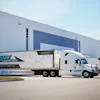
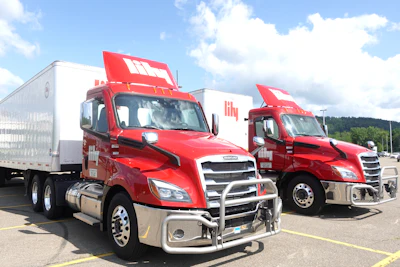
Many food supply chain businesses worry about losing control when outsourcing transportation to a 3PL. In reality, the 3PL collaborates closely with the company to ensure its needs are met. Trucks often are branded with the company’s logo rather than the 3PLs, and in many cases, customers are unaware that transportation has been outsourced. When executed properly, the transition is seamless.
There are numerous reasons for companies in the food supply chain to consider outsourcing transportation to a 3PL, not the least of which is peace of mind.