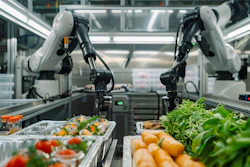
enVista launched enMotion WES+, an intelligent, cloud-based warehouse execution system (WES) built for automated and rapidly evolving warehouses.
“With enMotion WES+, we’re expanding on our enMotion WCS solution by intelligently modeling every workflow and subsystem in automated warehouses. When we asked 20 of our customers that run highly automated distribution centers how they plan and schedule work to ensure that their SLAs are met, the majority of them didn’t have a way to schedule their work or ensure they were on plan without running a lot of reports and manually reassigning tasks,” says enVista’s CEO, Jim Barnes.
Key takeaways:
· Using machine learning and predictive analytics, enMotion WES+ manages, plans and schedules how warehouse work gets done and what resource are required to ensure that customers’ orders meet key SLAs.
· enMotion WES+ is purpose-built to make real-time adjustments to warehouse workflows based on time, throughput, resource capacity and customer service levels. It works hand-in-hand with the modern WMS to dynamically orchestrate tasks across warehouse resources, decoupling work from traditional wave management rules to meet SLAs using data inputs from a wide variety of field devices and material handling equipment.
· enMotion WES+ works seamlessly with all automated systems, including conveyors, sorters AMRs, AGVs, goods-to-person, rack-to-person and shuttles. The software’s microservice-based architecture allows users to design, modify and optimize warehouse workflows – from induction to outbound – in real time without disrupting operations.
“enMotion WES+ takes the concept of Manufacturing Execution Systems and Advanced Planning and Scheduling and applies it to warehousing and distribution. Think of it like Google Maps for your warehouse. It defines the route the order needs to take through the warehouse, the capacity or throughput of every resource and what time the route needs to be finished. The system tracks order flow in real time, changing the order route or adding resources to the workflow if the SLA is at risk. This proactive exception management eliminates idle time and the feast-or-famine cycles often caused by traditional wave-based systems by continuously monitoring resources and dynamically assigning work to keep everything moving,” Barnes adds.