Anyone who has spent time inside a food manufacturing facility during peak season has seen the same pattern play out.
Trailers start arriving faster than docks can absorb them. Refrigerated equipment begins stacking up across the yard. Drivers wait for assignments that keep changing. Warehouse supervisors start reprioritizing inbound product almost hour by hour. Transportation teams scramble to adjust schedules while operations managers try to keep product moving without disrupting throughput across the facility.
At some point, the yard becomes congested enough that everyone starts to feel it.
Warehouse productivity slows down. Driver dwell increases. Detention costs rise. Product flow becomes inconsistent. Teams shift into reactive mode.
Then the conversations start.
Transportation blames warehousing. Warehousing blames labor. Operations blames execution. And eventually, somebody blames the yard.
But in most cases, the yard was never really the problem.
Peak season simply exposes the operational gaps that were already there.
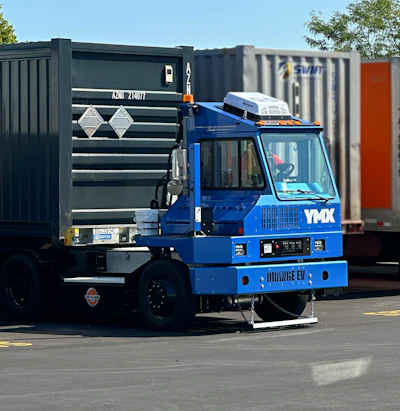
In food and cold chain logistics, the yard has quietly become one of the most important operational control points in the supply chain. It sits directly between transportation and warehousing, which means every delay, schedule change, labor shortage, dock disruption, or inbound surge eventually shows up there first.
The problem is that many facilities are still managing the yard with operating models that were never designed for today’s level of volatility.
Here’s five reasons why yard operations tend to fail during peak seasons.
1. The yard is still being managed like a support function
A lot of organizations still think about the yard primarily as a place to park and move trailers.
That approach may have worked years ago when supply chains were more predictable and facilities had more room for operational inefficiency. But food supply chains do not operate that way anymore.
Today, the yard directly affects transportation flow, dock utilization, labor productivity, trailer utilization, inventory movement, and product freshness. In cold chain environments, delays inside the yard can quickly create temperature exposure risks, compliance issues, and service failures that extend well beyond the facility itself.
Anyone walking through a congested yard during peak season can see how quickly small delays spread. One late trailer affects dock sequencing. Dock delays impact warehouse throughput. Warehouse slowdowns increase congestion outside the building. Eventually, the entire facility starts compensating manually.
The yard is no longer just a staging area. In many operations, it has effectively become the shock absorber for the entire facility.
2. Too much of the operation still depends on human coordination
Most food manufacturers have operations teams that work incredibly hard during peak season. The issue is not effort.
The issue is that many facilities are still relying on reactive coordination methods that become difficult to sustain once operational pressure increases.
It is still common to see yards being managed through radios, spreadsheets, whiteboards, text messages, and individual operator experience. Under stable conditions, experienced teams can usually keep things moving through constant communication and quick decision-making.
Peak season changes the equation.
As volume increases, trailer locations change constantly, dock priorities shift throughout the day, inbound schedules fluctuate, and warehouse throughput becomes less predictable. At a certain point, the operation becomes too dynamic for manual coordination alone to maintain synchronization across the facility.
This is usually the moment when teams start feeling like they are constantly reacting instead of operating with control.
3. Transportation, warehousing, and yard operations are still too disconnected
One of the biggest operational challenges during peak season is that transportation, warehousing, and yard operations are often managed almost independently from one another.
Transportation teams focus on appointment flow. Warehouse leaders focus on labor and throughput. Yard teams focus on trailer movement and congestion management.
Under normal conditions, those disconnected workflows may appear manageable. During peak season, however, the gaps between those functions become much more visible.
Inbound trailers arrive before docks are ready. Labor plans stop matching actual inbound volume. Trailer sequencing changes continuously throughout the shift. Drivers wait longer for assignments while warehouse teams reprioritize product movement in real time.
The result is not usually one catastrophic failure. It is a constant buildup of operational friction across the facility.
This becomes especially challenging in food and beverage environments where timing directly impacts freshness, shelf life, retailer compliance, and cold chain continuity.
4. Visibility alone is not fixing the problem
Over the past several years, food manufacturers have invested heavily in visibility platforms, automation technologies, transportation systems, and digital transformation initiatives. Most facilities today have significantly more operational data than they did a decade ago.
But many operations are discovering that visibility alone does not necessarily improve execution.
A dashboard may show where congestion exists, but it does not coordinate trailer movement. Visibility tools may identify delays, but they do not automatically stabilize dock flow or synchronize labor deployment across the facility.
This is one of the reasons many operations still struggle during peak season despite major technology investments. In many cases, organizations improved digital visibility without fundamentally changing how execution is orchestrated across transportation, warehousing, and yard operations.
Once variability increases, those operational gaps become difficult to hide.
5. Most facilities were never designed to absorb this much variability
Peak season problems are rarely caused by one major disruption. More often, operations begin struggling because dozens of smaller inconsistencies start compounding simultaneously.
A delayed trailer impacts dock sequencing. Dock delays reduce warehouse throughput. Congestion slows yard movement. Driver dwell increases. Transportation schedules deteriorate. Product flow becomes less predictable.
Once operational synchronization weakens, variability spreads quickly across the facility.
This is why some organizations appear far more stable during peak season than others. It is not always because they have larger teams, newer facilities, or more technology. In many cases, they simply operate with more coordinated execution across transportation, warehousing, and yard operations.
That shift is becoming increasingly important as food supply chains continue dealing with labor instability, tighter retailer expectations, transportation volatility, and growing pressure around product freshness and operational efficiency.
What can food manufacturers do about it?
Many organizations are beginning to realize that traditional fragmented operating models are becoming harder to sustain, especially during periods of high operational volatility.
As a result, more food manufacturers are moving toward connected execution environments designed to synchronize transportation, warehousing, labor coordination, dock activity, and yard operations in real time.
That shift usually starts with a few foundational changes:
● standardizing operational workflows across the facility
● improving real-time visibility into trailer movement and dock activity
● reducing dependency on manual coordination
● connecting transportation, warehouse, and yard execution
● improving predictive planning capabilities
● creating more consistent operational decision-making
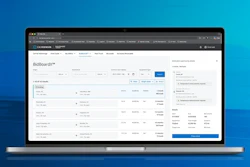
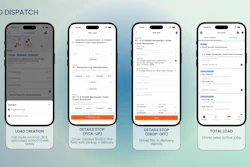
From there, many organizations are beginning to leverage autonomous yard operating systems (YOS) capable of combining execution, visibility, orchestration, AI, predictive analytics, and continuous optimization into a more connected operational framework.
The goal is not simply automation for the sake of technology. The goal is building an operation capable of predicting, adapting, and maintaining control when variability increases.
Because peak season is going to be here sooner rather than later and is not going to become less volatile. If anything, food supply chains are becoming more dynamic every year. The facilities that perform best during peak season are usually not the ones reacting faster to operational chaos. They are the ones operating environments designed to absorb disruption before it spreads across the network.