Today’s CPG suppliers must navigate a supply chain landscape shaped by rising costs, labor shortages, regulatory complexity, tariffs and increased consumer expectations. In 2026, success won’t come from reacting to these pressures, it will come from building resilience into every facet of their supply chains.
That’s why 3PLs have to deliver more. CPG suppliers should base 3PL selection on their ability to optimize performance and turn disruption into a competitive advantage.
In the year ahead, these four keys will define the retail supply chain; your ability to navigate them with the right partner will determine whether you merely keep up or pull ahead.
AI-boosted technology
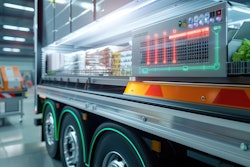
AI-empowered technologies are the next evolution in supply chain intelligence, where human expertise and digital precision work together to deliver greater speed and accuracy. These AI-driven systems don’t just automate – they learn, adapt and self-optimize, continuously improving how freight is routed, inventory is forecasted and customer demand is met. AI is turning operational data into an engine that predicts market shifts, reduces inefficiencies and ensures a steady flow of products from distribution center to store shelf.
3PLs should serve as a catalyst for innovation. By integrating AI with customizable, proprietary solutions and other data platforms, suppliers are positioned to accelerate efficiencies, growth and long-term resilience.
Master compliance
Rising SKU counts, stricter compliance requirements and shrinking delivery windows demand a new level of efficiency. From warehouse to distribution center to store shelf, suppliers must execute seamlessly or risk missed deliveries, lost sales and shrinking profitability.
From on-time, in-full (OTIF) performance to retailer-specific barcodes and labels, advance shipment notifications (ASN), pallet configurations and packaging slip requirements, leading 3PL partners are leveraging strategic retailer relationships and advanced technology solutions to manage – and master – every compliance demand. In turn, suppliers benefit from lower costs, greater reliability and consistently strong OTIF performance, driving higher in-stocks, increased sales, expanded line opportunities and deeper retailer trust.
The most efficient route to retail
Retail consolidation enables suppliers to maximize efficiency by combining truckloads with other customers to create a single, full truckload to the same retailer distribution center. This streamlined approach significantly reduces transit time and costs, enabling products to reach shelves faster and more efficiently.
A single consolidated truckload can replace an average of 34 less-than-truckload (LTL) shipments. With typical transit times of just two days – compared to the five-day average for LTL – suppliers realize 20-30% in cost savings. Beyond operational efficiency, this strategy supports greener, more efficient routes while boosting in-stock availability and sales.
Sustainability at every turn
Sustainability is no longer a choice – it's a core business decision. As CPG suppliers face increasing pressure to reduce their environmental footprints, 3PLs have a responsibility to support suppliers’ green initiatives. Today, retail logistics is not just about moving goods – it’s about doing so transparently, efficiently and responsibly.
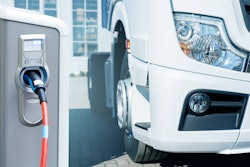
From optimizing transportation routes to fuel-efficient fleets and facilities, the right partner can reduce suppliers carbon footprint while maintaining high service levels. The result: fewer emissions, lower transportation costs and stronger On-Time delivery performance, every time.
The bottom line
Disruption is here to stay. In 2026, the difference between falling behind and pulling ahead is how prepared your supply chain is to handle it. The key to CPG success lies in selecting a 3PL that delivers strategic value and operational excellence – driving performance, resilience and sustained growth at retail.