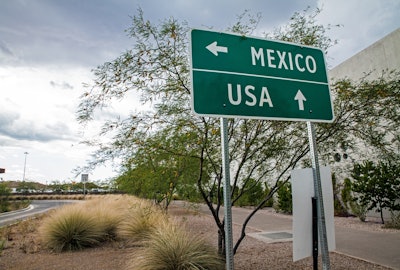
The U.S.–Mexico trade relationship is not a recent phenomenon, but a product of more than 40 years of deliberate investments, strategic agreements, and workforce development. Mexico began laying the groundwork for today’s relationship back in the 1980s by prioritizing education and manufacturing excellence, transforming Mexico from a labor-intensive manufacturing hub into a global leader in robotics-driven, lean, and Six Sigma-based production.
Mexico’s educational foundation, coupled with infrastructure investments and Mexico’s expansive network of free trade agreements, including pacts with Japan, South Korea, and Germany, positioned the country as an indispensable partner in global supply chains. The maquiladora program, modernized under NAFTA, further accelerated this growth by clustering manufacturing operations along the border in industries such as automotive, aerospace, and electronics. These early moves created the foundation for today’s cross-border boom.
From opportunism to optimization in cross-border
The COVID-19 pandemic, geopolitical shifts, and ocean freight disruptions initially drove manufacturers to seek “quick fix” nearshoring strategies. However, what began as a reactionary measure has evolved into a long-term optimization strategy. Companies are now deliberately moving production to Mexico to reduce lead times, strengthen supply chain resilience, and decrease reliance on Asia.
The numbers tell a clear story. Mexico has officially surpassed China as the United States’ top trading partner. U.S. imports from Mexico grew 5% in 2023, while imports from China fell by 20% while electronic cross-border shipments surged 384% year-over-year from 2023 to 2024.
These shifts demonstrate that nearshoring and cross-border services are a cornerstone of North American supply chain strategy.
Current cross-border dynamics in 2025
As of 2025, U.S.–Mexico cross-border trade is experiencing unprecedented activity. Automotive, consumer goods, and paper products dominate freight volumes, with Mexico’s advanced robotics-enabled manufacturing processes giving it an edge over other markets.
In turn, key infrastructure passage points reveal both opportunities and challenges. Currently, Laredo, Texas, processes more than 36% of all U.S.–Mexico truck freight, and wait times at major ports like Laredo, El Paso, and Otay Mesa often stretch for hours, highlighting the urgent need for operational modernization at the border.
One good news is that a newly approved international bridge between Laredo and Nuevo Laredo, projected to handle 30,000–50,000 daily trailer crossings by 2050, is already in the works and shows the long-term commitment to expanding trade capacity between the two countries.
It’s important to note that, despite these investments, no single logistics provider controls more than 5% of Laredo’s market. This fragmentation shows the critical role of 3PLs in creating integrated, reliable, and scalable cross-border networks for shippers within both borders.
Why 3PL expertise is indispensable
Cross-border shipping is a high-stakes balancing act that demands fluency in two sets of regulations, languages, and business cultures. An experienced 3PL acts as a strategic partner, bridging gaps between compliance, infrastructure, and cultural expectations.
Integrated capabilities
Top-tier 3PLs provide comprehensive services across customs brokerage, drayage, warehousing, and visibility platforms. With bilingual, bicultural teams, they navigate complexities like SAT inspections in Mexico and in-bond shipments in the United States. They also mitigate risks through CTPAT-certified facilities, 24/7 monitoring, and scalable networks that adjust to seasonal or tariff-driven shifts.
Technology as a differentiator
Shipment visibility is the most common pain point for shippers. Advanced 3PLs address this with custom transportation management systems (TMS) that harmonize U.S. and Mexican operations, tracking metrics in both miles and kilometers, or pesos and U.S. dollars. AI-powered predictive analytics, digital document management, and ERP integrations reduce clearance times, proactively flag exceptions, and improve communication across carriers, brokers, and customers.
Cultural fluency and compliance
While the United States emphasizes rigid scheduling, many Mexican manufacturers operate on a first-come, first-serve basis. Misaligned expectations can easily create costly delays. A seasoned 3PL bridges this divide with local relationships, bilingual communication, and deep compliance expertise in rules of origin, labeling, and duties, turning potential liabilities into competitive advantages.
Building the right network now
The U.S.–Mexico cross-border corridor is the backbone of North American supply chains. With trade volumes climbing, infrastructure straining, and nearshoring accelerating, the role of the experienced 3PL has never been more critical.
Industrial real estate in Mexican border cities is tightening, and carriers with cross-border expertise are increasingly selective. Shippers that delay investments in integrated 3PL partnerships risk rising costs, limited carrier access, and avoidable inefficiencies. Conversely, those who act decisively, building visibility, securing reliable capacity, and aligning their U.S. and Mexican operations into one unified network, will turn cross-border shipping into a long-term advantage.