For years, electrification in freight transportation has been framed as a long-haul challenge—one tied to battery range, charging infrastructure, and the realities of moving freight across thousands of miles - using this as the sole reason to dismiss the technology.
But for many food supply chains, the most practical place to start isn’t on the highway.
It’s in the yard.
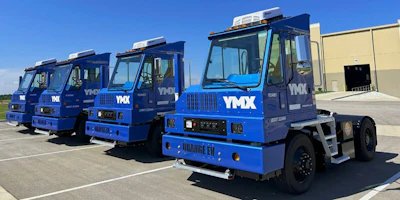
Across the industry, yard operations remain one of the most overlooked parts of the supply chain. Yet they sit at the center of distribution activity—connecting transportation, warehouse operations, and store replenishment. Every trailer movement, dock assignment, and yard tractor cycle plays a role in how efficiently a distribution center performs. There has been an increasing look into how sustainably this operation runs.
As companies look for ways to reduce emissions while maintaining operational performance, the yard is emerging as one of the most logical places to begin.
The sustainability lever many networks overlook
When sustainability discussions take place in supply chain leadership meetings, they often focus on long-distance transportation. That’s understandable given the visibility of over-the-road fleets and the scale of fuel consumption involved.
However, the yard represents an opportunity that is both immediate and operationally manageable.
Yard equipment operates in highly predictable patterns. Routes are short, utilization is measurable, and equipment cycles are consistent from shift to shift. The concerns of over the road operations (variable routing, concerns surrounding charging opportunities) are offset by yard fleets working within defined boundaries and controlled schedules.
Those characteristics create an environment where electrification can be implemented more effectively.
Charging infrastructure can be planned around known usage patterns and site schedules. Energy demand can be forecast with greater accuracy and controlled with opportunity charging or end of shift scheduling
In this context, electrification becomes less about testing emerging technology and more about applying operational discipline to a new type of equipment.
For supply chain leaders, that distinction matters.
Why food supply chains are well positioned
Food and grocery distribution networks, in particular, are well suited to benefit from this shift.
Earlier in my career working within grocery distribution environments, one reality stood out: the yard never stops moving. Distribution centers operate around the clock, coordinating inbound supplier shipments with outbound store replenishment.
That constant movement creates intense operational pressure. Trailers need to be staged quickly for inbound receiving. Empty equipment must be repositioned to support outbound loading. Dock doors turn continuously as facilities work to keep product flowing through the building.
When yard operations slow down, the effects are felt immediately inside the warehouse.
Forklift operators wait on trailers. Shipping schedules begin to compress. Transportation teams face delays that ripple across the network.
Because of that, the yard has always been a place where operational discipline matters. Equipment reliability, driver efficiency, and trailer visibility all contribute to how well the facility performs.
Electrification has the potential to support those same operational priorities.
Electric yard equipment can help reduce exposure to fuel price volatility, an ongoing concern for logistics operations that rely heavily on diesel-powered equipment. Electric drivetrains also tend to involve fewer mechanical components, which can simplify maintenance planning and reduce the types of service interruptions that disrupt yard operations.
Operators often report improved working conditions as well, including lower noise levels and smoother vehicle operation during long shifts. For facilities that operate 24/7 or are located near surrounding communities, those differences can be meaningful.
None of these benefits exist in isolation. Together, they contribute to a more stable operating environment for distribution centers managing constant freight movement.
Moving toward phased deployment
In the early stages of electrification, many organizations approached the technology as they have with nearly every new idea - with skepticism and caution.
Today, the conversation has turned from asking whether electrification works to evaluating where it can create the most operational value within their networks. Supply chain leaders see that there are benefits - but are wanting to ensure it works before adopting widely.
For many companies, that evaluation begins with deploying electric yard equipment at a single high-volume distribution center. Facilities with constant trailer activity provide the best opportunity to understand how electrified fleets perform under real operating conditions.
Leaders can evaluate factors such as equipment utilization, charging schedules, energy demand, and maintenance requirements while maintaining the reliability their operations depend on.
From there, organizations can determine how electrification fits into broader network planning.
This phased approach allows companies to align electrification with other infrastructure decisions, including facility upgrades, yard management systems, and long-term fleet replacement cycles.
This makes electrification a part of a strategic roadmap versus a standalone initiative.
Data is changing the conversation
A key factor accelerating electrification is the ever-increasing availability of actionable operational data within modern supply chains.
Yard management systems, telematics platforms, and facility analytics now provide insights that many organizations simply didn’t have a decade ago. These tools allow leaders to evaluate equipment utilization, idle time, trailer dwell patterns, and congestion points across their yards - and use that information to make improvements.
That level of visibility fundamentally changes how electrification decisions are made.
Instead of relying on theoretical assumptions about equipment performance, organizations can analyze real operating conditions to determine whether electric fleets can support their workload.
Understanding how frequently yard tractors move, how long they idle between assignments, and when peak yard activity occurs can help determine charging strategies and infrastructure requirements.
In many cases, the data reveals something encouraging: the operation may already be well suited for electrification without significant redesign.
For executives responsible for balancing operational performance with long-term sustainability goals, that kind of clarity is invaluable.
A strategic shift for the next phase
Electrification will not transform supply chains overnight, nor should it.
Logistics networks are complex systems that require reliability above all else. Any equipment transition must support operational continuity while delivering measurable benefits.
As supply chain leaders map out the next phase of their network strategy, they are under increasing pressure to improve efficiency, strengthen resilience, and reduce environmental impact, all at the same time.
Electrification, particularly in controlled logistics environments, offers a practical pathway to advance each of those objectives.
The industry often talks about transportation transformation happening on the highway.
But for many food distribution networks, the real shift may begin inside the fence line, where trailers move, dock doors turn, and the daily rhythm of the supply chain never slows down.